
In the Jonathan Peck Memorial Lecture on October 21, during the National Conference of the Chartered Institute of Environment (CIEH) at the University of Nottingham (20 and 21 October), Jolyon Medlock said about “Emerging challenges in public health“.
Jolyon Medlock is a Medical entomologist/parasitologist, leading Medical Entomology group at Public Health England, an executive agency of the UK Department of Health.
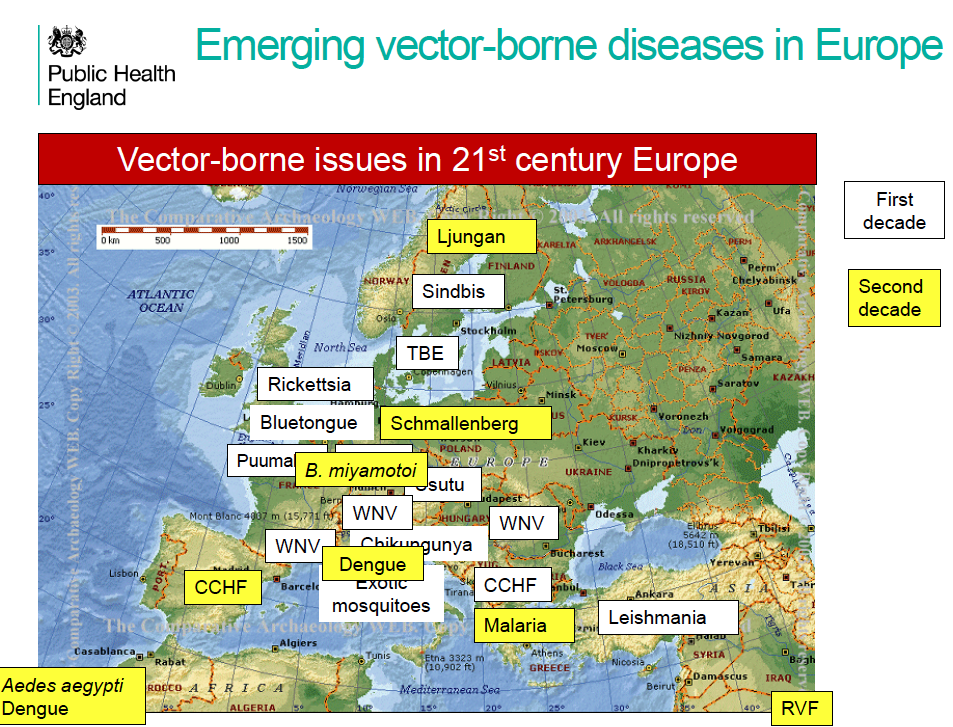
Medlock said about a as a growing threat by mosquitoes (especially Aedes albopictus, Aedes aegypti and Aedes japonica), and about the difficulties of the local authorities to fight pests, and implications for public health.
In particular, Aedes albopictus, the Asian tiger mosquito, which is now well established in the EU and is spreading rapidly. The problem is its ability to transmit diseases such as dengue and chikungunya.
But there are also ticks …
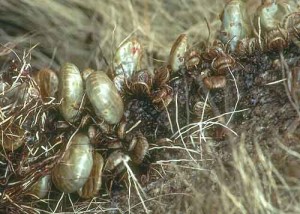
The brown dog tick (Rhypicephalus sanguineus) is globally, although Europe is still mainly confined to the Mediterranean basin.
It is a vector of three Babesiosis, l’Ehrlichiosis, and Mediterranean spotted fever (MSF).
Babesiosis (or piroplasmosis) is an infectious disease caused by a protozoan of the genus Babesia, able to parasitize red blood cells of mammals (including human ones) and birds.
The Ehrlichiosis, a disease also known as canine rickettsiosis, canine hemorrhagic fever, typhoid canine, tropical canine pancytopenia, is a tropical disease transmitted by ticks in dogs usually caused by E. canis.
The Mediterranean spotted fever (Mediterranean spotted fever, African tick typhus) is an acute infectious disease caused by Rickettsia conori, transmitted to humans by the bite of the dog tick (Riphicephalus sanguineus).
The brown dog tick is primarily a parasite of dogs, but it can also bite people. It adapted well in homes, hiding (such as bedbugs) in hidden places such as baseboards and, since it can survive for 18 months without a blood meal, and the females can lay up to 4,000 eggs, control the pest is challenging.
In the UK the species is non-native, it arrived in the country in two main ways: many animals are now traveling (with the pet passport) and also to the increase in international trade of puppies, particularly illegal following the way of partner media (especially Facebook), making it extremely difficult to identify to the police.
The concern for the increase in infections caused by the brown dog ticks in the UK is that the National Pest Advisory Panel of the CIEH (NPAP) has published a new brochure on its Control and Prevention.